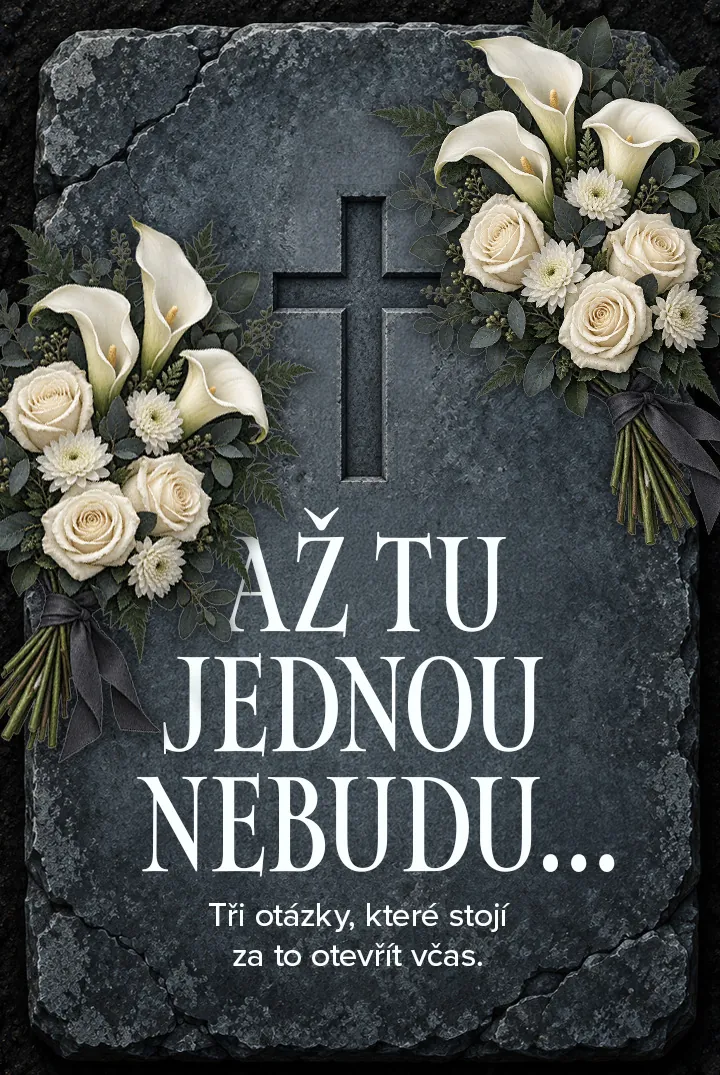
Death comes to all of us. We're still learning how to talk about it
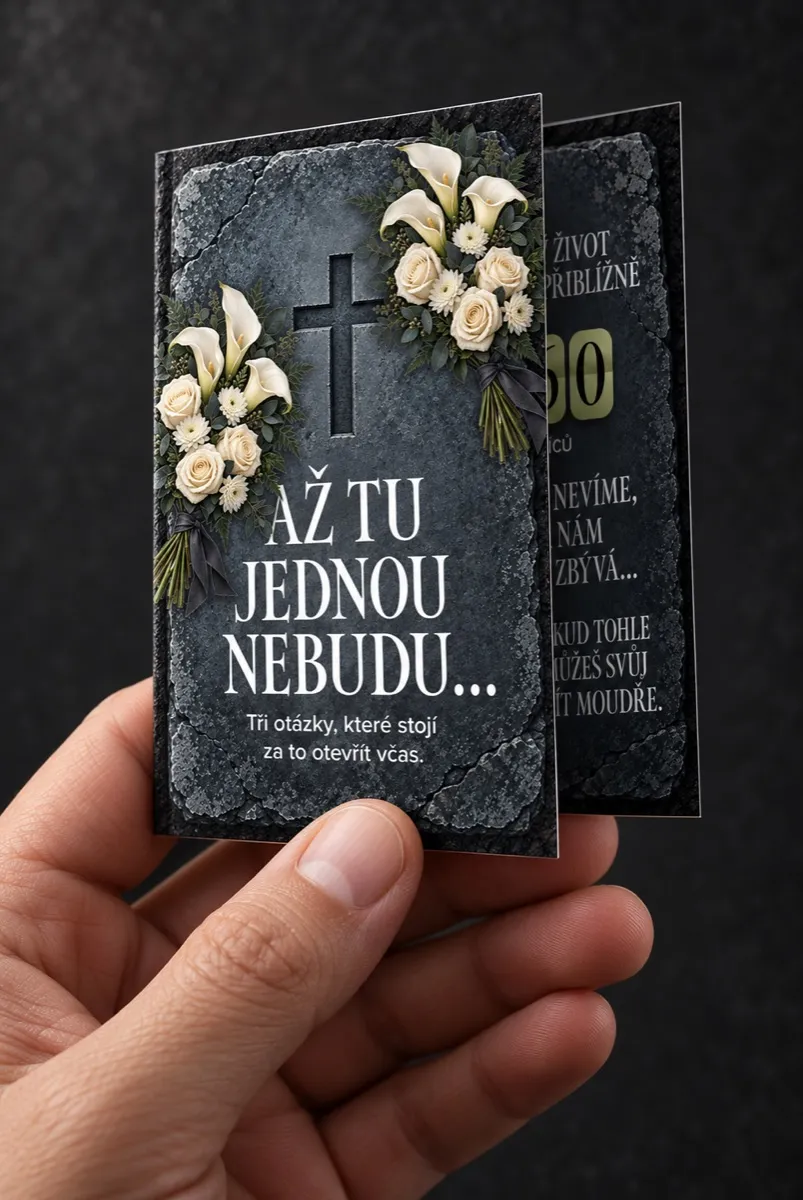
Life expectancy in Czechia is about 80 years, roughly 960 months. Death is unavoidable, whether we talk about it or not. What do you say to someone who has lost a person they love? What do you do with your own fear? And what hope does Christianity offer?
Life expectancy in Czechia: Czech Statistical Office, 2025
Choose where you want to start
Ask yourself while there's still time
- Who do I need to tell that they matter to me?
- What have I been putting off for too long?
- What do I want to leave behind?

Death is already part of our lives
A representative survey of people in Czechia by the Center for Palliative Care and the STEM agency (September 2025) shows that loss and caring for someone who is sick are part of life for young people too.
75%
of people have lost someone close to them
40%
of people aged 18–29 have already cared for someone seriously ill
54%
of people would most want to say goodbye to their family at the end of life
Being there often helps more than explaining
Grief doesn't follow one path or one right pace. You might feel sadness, relief, anger, emptiness, or all of it at once. When someone close to you is going through it, you don't have to fix anything. What helps most is carrying the pain together with them.

What you can say
- “I’m so sorry for what you’re going through.”
- “Would you like to tell me about [name]?”
- “What can I help you with today?”
What you can do
-
Reach out. A short message is enough.
-
Offer something specific. Like doing their shopping or bringing a meal.
-
Reach out again. After the funeral too, and a few weeks later. Set a reminder in your calendar for Christmas or for the birthday of the person who died.
Fear is often more specific than it seems
Some people fear pain. Others fear losing control, being alone, being forgotten, or simply no longer existing. Once you know exactly what you're afraid of, it often gets a little easier.

-
Name your fear
Finish the sentence: “When I think about death, what scares me most is…”
-
Tell someone
Pick someone who knows how to listen and isn't in a hurry to give answers.
-
Take one step
Talk with the people close to you, write down your wishes for the end of your life, or find professional help.
When it's too much
Don't stay alone with strong anxiety
If your life or someone else’s is at risk, call 112. It’s free, open 24/7, and the operators speak English.
For crisis support in English, the SOS Centre of Diakonie Prague is free. Open Mon to Thu 9–20, Fri 9–17, best to book ahead: +420 777 734 173.
The Czech crisis lines 116 123 (adults) and 116 111 (under 26) are free and nonstop, but they answer in Czech.
Ask us to pray for you. The form is in Czech, but you can write in English. We usually reply within two days.
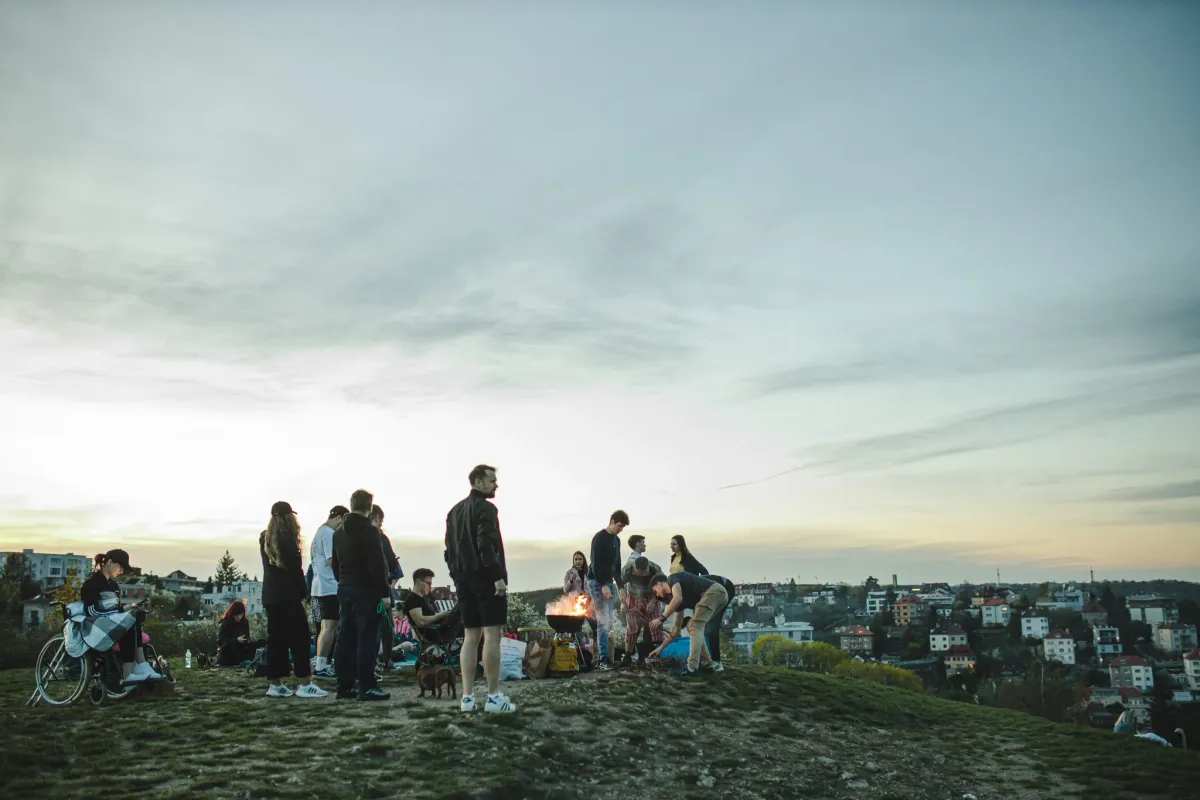
God doesn't forget people. One day he will wake them back to life
The Hebrews, whose wisdom shaped much of the Bible, saw a person as a whole: body, emotions, mind and spiritual life belong together. That's why the Bible often compares death to sleep. At a time when people in Egypt were fascinated by stories about life after death, the Bible says something different: those who have died are asleep. They don't feel time passing and they don't suffer. And after sleep comes a new morning. Christian hope points to the resurrection of the whole person, which Jesus promised and went through himself.
Where to find it in the Bible: Ecclesiastes 9:5 Daniel 12:2 John 11:11–14 1 Thessalonians 4:13–16
-
Death is rest
The Bible says the dead know nothing. Someone who has died feels no pain or anxiety, and time doesn't pass for them.
-
Jesus went through death himself
All of Christian hope rests on his resurrection.
-
God will restore human life
The Bible points to resurrection, to seeing each other again and to a world without death.
“I am the resurrection and the life.”
Jesus, John 11:25 (NIV)
Held on 31 October
When I'm gone
A morning about death, loss, meaning and the hope Christianity offers.
- When
- Saturday 31 October 2026, 11:00
- Entry
- free
- Language
- The talk is in Czech. You can follow it with live English subtitles on your phone.
We're getting the talk recording ready. In the meantime, we meet every Saturday at 11:00.
Come to the next Session
Short and honest
Is it normal to still be grieving after several months?
Yes. Grief has no fixed schedule, and it often comes back in waves: on anniversaries, during big changes, or with completely ordinary memories. But if it keeps you from getting through normal life for a long time, or you have thoughts about your own death, get professional help. If you are in danger, call 112, free and 24/7 with English-speaking operators. For crisis support in English, the SOS Centre of Diakonie Prague is free (Mon to Thu 9–20, Fri 9–17, best to book ahead): +420 777 734 173. The Czech lines 116 123 (adults) and 116 111 (under 26) are free and nonstop, but in Czech.
According to the Bible, what does a person experience after death?
The Bible compares death to sleep and says the dead know nothing (Ecclesiastes 9:5; John 11:11–14). We read this to mean that a person experiences nothing after death: they don't sense time or what is happening among the living. The hope is that one day the whole person will be raised back to life (1 Thessalonians 4:13–16).
Does Christianity mean eternal torture in hell?
We don't think so. When we read the Bible, we see the final judgment as the end of evil, death and suffering. The idea that a person would be consciously tortured forever for what they did is not in the Bible, as we read it. More on this in the talk Why is hell the greatest religious hoax? (in Czech).
Can I come to a Session if I'm not religious?
Of course. People of many faiths and of no faith at all come to SafePoint. We're a Christian community, but doubts, disagreement and questions are welcome here.
And don't worry about the language. The talk is in Czech, but you can follow it with live English subtitles on your phone.
Who you can turn to
The European emergency number. Free, 24/7, and the operators speak English. 155 is the direct ambulance number, but it answers in Czech.
Free crisis support in English. Mon to Thu 9–20, Fri 9–17, best to book ahead. Phone +420 777 734 173.
Bereavement support in person, by phone or online. In English by arrangement. The first three sessions are free, then 500 CZK each. Phone +420 775 166 863 or e-mail poradna@cestadomu.cz.
Linka první psychické pomoci for adults, and 116 111 (Linka bezpečí) for people under 26. Both are free and nonstop, but they answer in Czech.
Information about dying and care from a Czech research and education centre. It is not a help line and offers no direct care.
Tell us what you need help with. The form is in Czech, but you can write in English. We'll get back to you personally, usually within two days.